Antigen-antibody Interation Occurs in Which of the Following
D The antigen binding site is rigid c The antigen binding site undergo conformation changes after contact with the antigen d None of the above. During the first stage the reaction involves the formation of antigen - antibody complex.

This Table Describes Different Types Of Hypersensitivity In Type I Ige Mediated Hypersens Hypersensitivity Medical Laboratory Science Medical School Studying
An antibody is an immunoglobulin.

. X-Ray crystallography studies of antigen-antibody interactions show that the antigenic determinant nestles in a cleft formed by the combining site of the antibody as illustrated in Figure 1. The antigen-antibody reaction is widely used in laboratory diagnostics including immunohaematology. It is a Y shaped molecule which is basically a protein that is produced by the B cells of the immune system.
It is more sensitive than precipitation for antibody detection. Pathogens include viruses bacteria fungi proto- zoan parasites and toxins. This is a common cause of mild inflammatory reactions.
An antibody has a paratope that can recognize the epitope that is present on the surface of the antigen. This interaction is responsible for the body s defense against viral and bacterial infections and other toxins. If the reaction occurs in extravascular spaces the result is edema inflammation and infiltration of polymorphonuclear leukocytes which may later be replaced by mononuclear cells.
The reaction between antigen and antibody occurs in three stages. True Innate - Hypodermal areolar connective tissue - Keratinized epithelium Interferon is produced by one cell and is used to prepare nearby cells to fight the infection. The key reaction of immunology and immune defense is the interaction of antibodies and antigens.
Depends on antibody genes regulating antigen genes. Antibodies are produced in response to the exposure to antigens. The classical pathway of complement activation requires antigen-antibody interactions.
The interaction between antigen and antibody occurs in two stages. The result is the development of a three-dimensional latticework of red cells held together by antibodies and visible as clumping. However this may take 4 hours at normal ionic strength and at a temperature of 37 C 20.
Covalent interactions all of the following are intermolecular that occur between antigen and the Fab region of an antibody except antigens must be multi-determinant all of the following conditions are required for the precipitation of antigenantibody complexes except rocket immunoelectrophoresis. At low ionic strength the reaction is faster but how much faster depends on how. Immune Complex Formation 3.
For maximum sensitivity the antigen-antibody reaction should be allowed to reach equilibrium. Pathogens and allergens Karp 1996. Antigen antibody interactions only occur when the binding site on the antibody is preformed and perfectly complementary to the antigen.
Antibodies are globular proteins. It is rapid and reversible but without any visible effects. True The complex C3bBb is the C3 convertase in the alternative pathway.
This primary reaction has no visible effect and the reaction is rapid. The antigen which fits into a lock ie. One of the following parts of the IgG molecule is NOT involved in binding to an antigen.
In the primary or initial stage non-covalent binding between the antigen and antibody produces small and soluble antigen-antibody complexes as a result of primary union. The body s defense mechanism recognizes forei gn substances or antigens and raises specific antibodies against them. Anti-A is mixed with red cells carrying the corresponding antigen ie.
14 The antigen-antibody interactions are considered inducible which means a The antigen binding site performed a site that exactly fits the antigen. Yeilds a precipitation curve. The reaction between an antigen and antibody is the basis for humoral immunity or antibody mediated immunity.
The next stage leads to visible events like precipitation agglutination etc. The association between antigen and antibody includes various non-covalent interactions between epitope antigenic determinant and variable region VHVL domain of antibody. The ionic bonds hydrogen bonds van der Waals.
It is a reversible chemical reaction. Occurs only in the human body. Antigens are substances that stimulate an immune response from the body.
Antibody-Dependent Cell-Medicated Cytotoxicity ADCC 6. Antigenantibody reactions cause inflammation and cell damage by a variety of mechanisms. Allergens include pollen spores and food addi- tives.
Antigenantibodyantigen-antibody complex 1 The. Antigen-antibody reaction in which antibody combines with a particulate antigen such reaction called agglutination. The antigen-antibody reaction occurs in two stages.
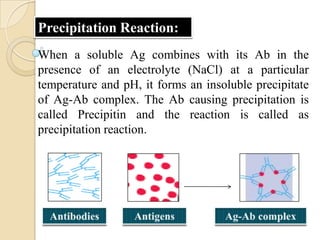
38 When antigen has multiple identical sites the valence of the antibody contributes significantly to the stability of. The primary stage is the initial interaction between antigen and antibody. Antigen -Antibody reacts together resulting in precipitation.
Antigen- antibody interactions are used to detect a number of immune diseases check for humoral immunity and identify biological molecules. T lymphocytes in the immune system and also used in immunotherapy are best described as. This reaction may occur in a test tube or on a microscope slide or in a microwell.
There are two general categories of antigens. Luckily the kinetics is not linear and in the first hour the uptake is already 87 of the maximum 40 after 15 min 20. Antigen - Antibody reaction perform by placing a constant amount of antibody in a series of tubes and adding increased amount of antigen.
Thus our concept of antigen-antibody reactions is one of a key ie. The antigen- antibody interaction is bimolecular irreversible association between antigen and antibody. The following points highlight the eight main types of interaction between antigen and antibody.
Plotting the amount of precipitate against increasing antigen conc. Antibody avidity is an average measure of the affinity of the antibodies for a particular antigen and increases in avidity during an immune response are largely a result of somatic hypermutation and subsequent selection of high-affinity B cells in germinal centers. It is further subcategorized into the following types- Slide agglutination Tube agglutination Indirect passive haemagglutination Reverse passive haem-agglutination.
There is noncovalent interaction between the epitopesantigenic determinants of antigens and the variable region Vh Vl domain of antibodies. Following are some of the general features of these interactions. It takes place when serumplasma antibody eg.
1The interaction of antigens and antibodies.

Humoral Immunity Is Antibody Mediated And Includes Antibodies That Tag A Pathogen For Destruction By Different Cells This T Immunology Nursing Study Mediation

Image Result For Cell Mediated And Humoral Immunity Immunity Nursing Biology Lessons Medical Laboratory Science

Pin On N U R S I N G S C H O O L

Mhc 1 Expressed On All Nucleated Cells Presents Endogenously Synthesized Antigens Which Are Delivered To T Medical Laboratory Science Biochemistry Immunology

Constant And Variable Regions Of Immunoglobulins Biology Class Molecular Structure Immunology

Antigen Antibody Reactions An Overview Sciencedirect Topics

Pin On Medtech

Chapter 5 Antigen Antibody Interactions Immune Assays And Experimental Systems

Antigen Antibody Precipitation Reactions Precipitation Medical Laboratory Physiology
Antigen And Antibody Reaction

Chapter 5 Antigen Antibody Interactions Immune Assays And Experimental Systems

Antigen Antibody Precipitation Reactions Precipitation Medical Laboratory Physiology

Pin On Complement Fixation

An Allergic Reaction Occurs After Plasma Cells Produce Ige Antibody Against A Specific Antigen And Mast Cells Become Activated Belajar Tubuh Hidung

Antibody Definition Structure Function Types Medical Laboratory Scientist Biochemistry Medical Laboratory Science
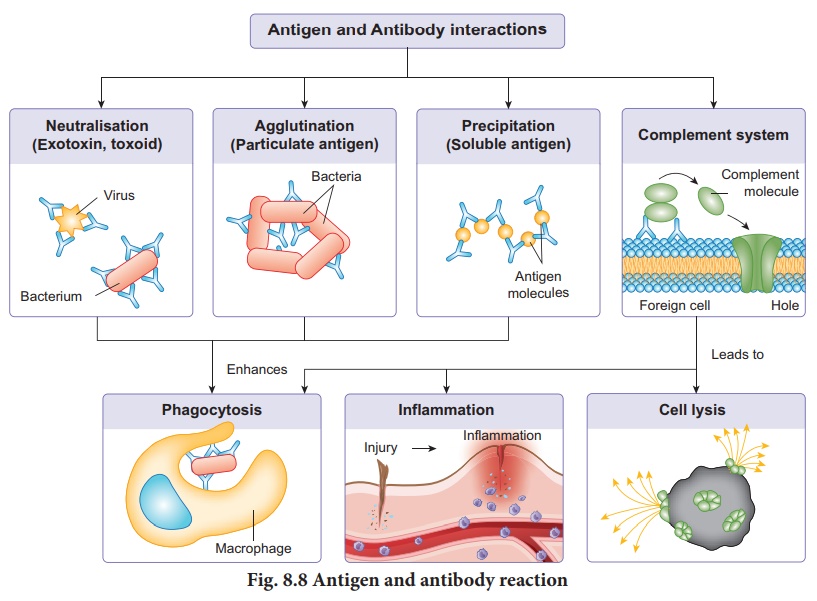
Antigen And Antibody Interaction Immunology

Antigen Antibody Reactions Physical Chemistry Systems Biology Microbiology
Antibody Antigen Biology Notes Medical Laboratory Technician Immunology

Detecting Antigen Antibody Complexes Microbiology


Comments
Post a Comment